Marketing Your Book: What a Book Launch Can Teach You About Selling Anything
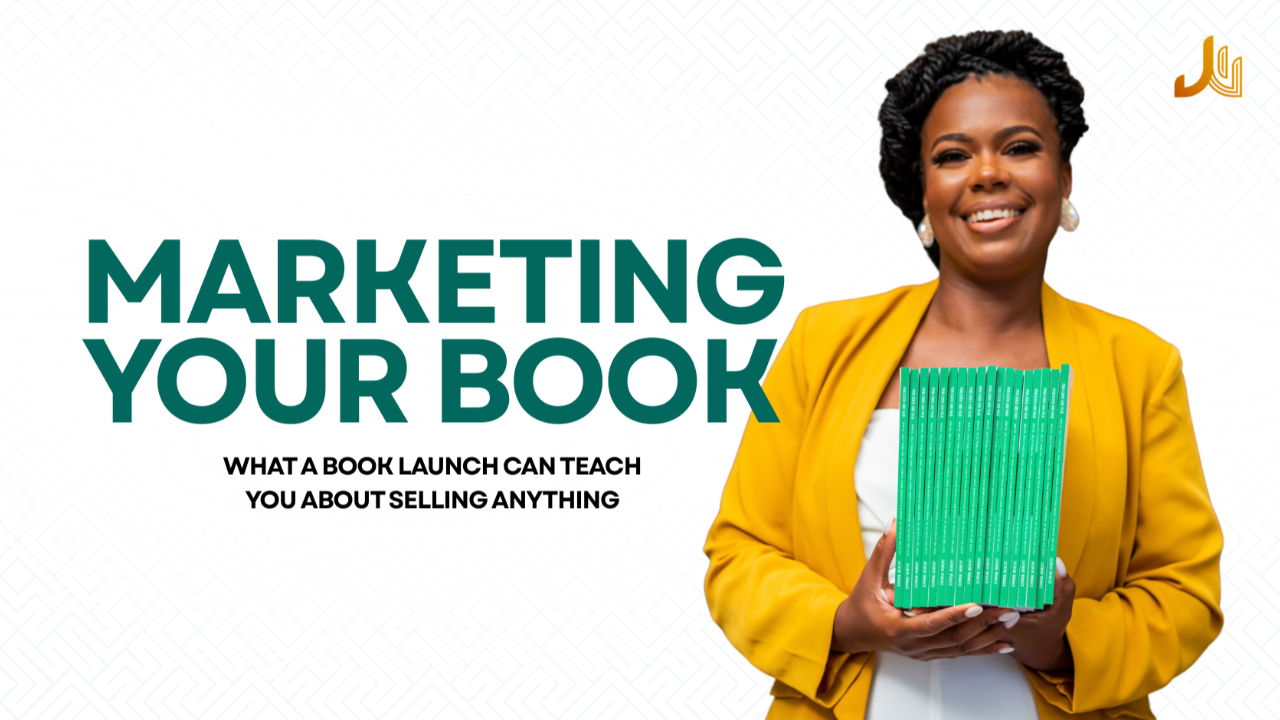
A Book Launch Will Teach You Almost Everything You Need to Know About Selling
A lot of authors spend months, sometimes years, writing a book, and somewhere along the way, they develop the expectation that once the book is available, people are naturally going to want it.
You worked hard on it. You know the information can help people, and you know the story is powerful. So you publish it, announce that it is available, put the link on social media, send a few emails, and wait for the sales to come in.
And then, crickets.
When the sales do not come in at the level you expected, you start questioning the book. Maybe people are not interested. Maybe the topic is wrong. Maybe your audience is not large enough.
But sometimes the problem is not the book. Sometimes it is the marketing.
A book launch will teach you almost everything you need to know about selling because it forces you to learn how to communicate value, create demand, understand buyer behavior, build anticipation, create urgency, and confidently ask people to buy.
Creating the Product and Creating Demand Are Two Different Jobs
Writing the book is one job. Selling the book is another.
I tell authors that writing is probably about 30% of the process, while selling is the other 70%. Being exceptional at writing does not automatically mean you are going to be exceptional at selling.
I see experts and entrepreneurs spend the majority of their energy creating the book, program, course, offer, website, and content, and then they get to the point where it is time to sell and realize they have not spent nearly enough time thinking about how they are going to create demand.
Creation feels productive because you are making something. Marketing feels different because now you have to go into the marketplace and communicate why anybody should care.
Your responsibility as an author does not end when the manuscript is complete. In many ways, that is where your responsibility as a marketer begins.
Your Audience Is Buying What the Book Represents
People rarely wake up thinking, “I want to buy another book today.”
They are thinking about something they want, need, are frustrated by, are trying to understand, are trying to fix, or are trying to achieve. Your book becomes relevant when it enters one of those conversations.
Being available is not a value proposition.
Your audience needs to understand what the book means for them. What will they understand after reading it? What problem will they be better equipped to solve? What perspective will change? What transformation will the book help facilitate?
If your book is connected to your expertise, you are not simply selling information. You are introducing people to your intellectual property.
Once you understand that, your marketing gets stronger because you stop trying to convince people to buy a book and start showing them why the conversation inside the book matters to their life, career, relationships, or goals.
Attention Is Not Demand
You can get a lot of likes and very few sales. You can have a video go viral and sell almost nothing. You can have thousands of followers and struggle to sell a few hundred books, while someone with a relatively small audience can have people who consistently buy.
Attention means someone noticed you. Demand means someone sees enough value to take action.
Those are not the same thing.
Your buyer moves through a progression. They see it, understand it, recognize why it matters to them, trust the person presenting it, want it, and then buy it.
That is why one post, one email, or one announcement usually is not enough.
Repetition Creates Familiarity, Not Boredom
Authors often get tired of talking about their books long before their audience gets tired of hearing about them.
You have been living with your book for months. You wrote it, edited it, reviewed the cover, worked on the description, talked about it with your team, and read sections repeatedly. By launch week, you may be tired of talking about it.
That is a you thing.
Your audience has not had that same experience. Someone might hear about your book for the first time on your twentieth post. Someone else might see your first three emails but not be in a position to buy until the fourth.
Repetition creates familiarity.
The key is to repeat the central message without repeating the exact same content. Tell the story behind the book, teach a concept, share an excerpt, address an objection, explain why you wrote it, share a reader response, or talk about what you want readers to do differently after reading it.
The product stays the same, but the entry point into the conversation changes.
That is marketing.
Give People a Reason to Buy Now
Why should somebody buy your book today?
Your book will probably still be available next week, next month, and hopefully three years from now, so you need to give people a compelling reason to act now instead of telling themselves they will get it later.
Later is one of the biggest enemies of conversion.
Your urgency does not have to be manipulative. You might offer a launch bonus, attach a live event to the purchase, provide exclusive training, or create a special experience for people who buy within a specific period.
You do not have to manufacture false scarcity, but you do need to answer the question: Why now?
And you have to ask for the sale.
Get your copy. Order the book. Register. Apply. Enroll. Book the call.
Whatever the appropriate action is, say it confidently and clearly.
Selling is not separate from serving when the product you are selling genuinely helps the person you created it for.
Your Best Marketing Starts Before Launch Day
If you wait until your book is available to start talking about it, you are late.
Strong launches build anticipation before there is anything to buy. Bring people into the process, show them behind the scenes, introduce the problem, teach around the central ideas of the book, share pieces of your journey, and start conversations around the subject.
By the time you announce that the book is available, you should not be introducing something completely unfamiliar. You should be giving people access to something they have already been hearing about.
Demand can be created before the transaction becomes available.
Let the Data Teach You
Every launch should make your next launch better.
Study which emails performed well, where your buyers came from, which content generated sales, what questions people repeatedly asked, when sales increased or slowed down, what you spent versus what you earned, and what you would keep or change next time.
We do a launch debrief immediately after a launch because everything is still fresh.
Even an underperforming launch can give you valuable information. Sometimes those launches become your greatest training grounds.
Never a loss, always a lesson.
The real failure is collecting all that information and learning nothing from it.
Your Book Is the Beginning, Not the End
Your book can and should sell more than the book.
Someone can buy your book, spend hours with your ideas, learn your methodology, understand how you think, implement your strategies, and eventually ask a much more valuable question: How can I work with you?
Your book can generate clients, attract speaking opportunities, lead to workshops, strengthen your authority, and become the intellectual foundation for an entire suite of offers.
Honestly, the book sale may be the smallest transaction in that entire ecosystem.
This is why I want you to stop looking at your book launch as one moment when everybody rushes out to buy your book. Think of it as a business exercise, a marketing fitness test, and a messaging lab.
The goal is not simply to launch a book successfully. The goal is to become skilled at communicating the value of what you create so you can apply those principles to everything else your business has to offer.
Your book truly is only the beginning.
Listen to Episode 87 of the Published and Paid Podcast here: EPISODE LINK
Release your expertise, write the book, take the stage, get published, and get paid.
Stay connected with news and updates!
Join our mailing list to receive the latest news and updates from our team.
Don't worry, your information will not be shared.
